

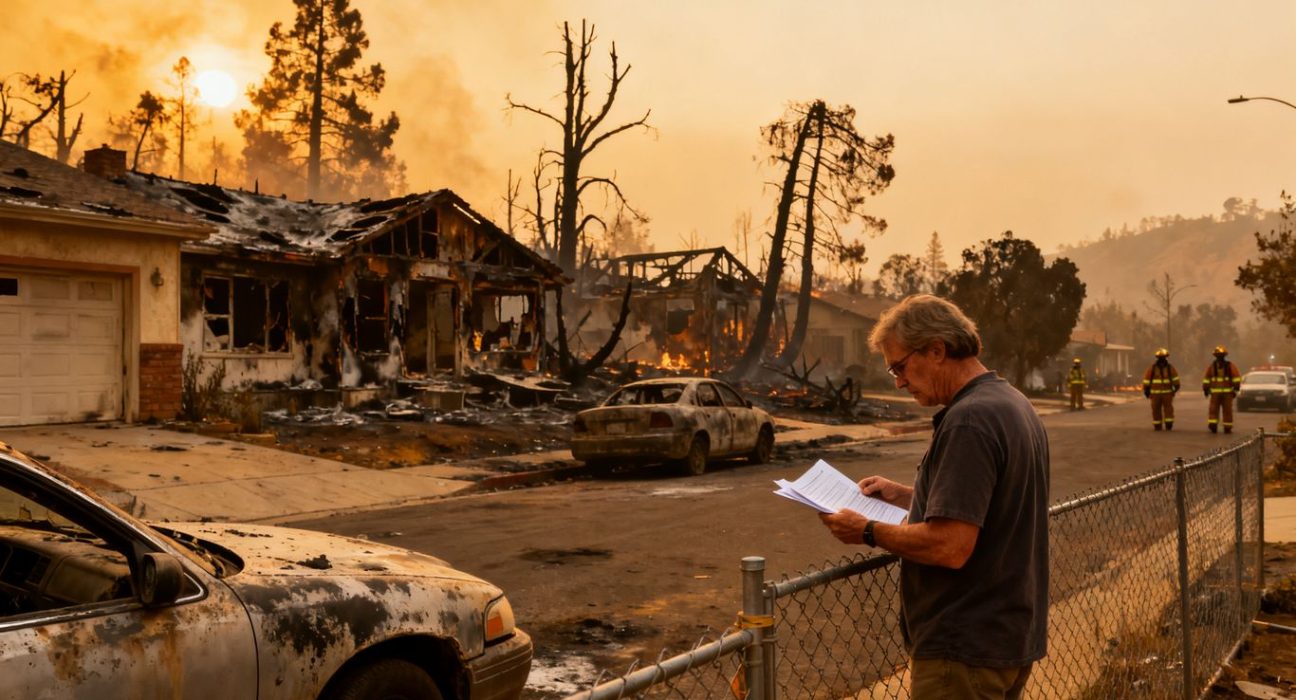
A wildfire claim against a utility generally depends on whether the utility’s conduct helped ignite or spread the fire and whether that conduct caused a homeowner’s losses. The legal theory may involve negligence, violations of safety rules, or other state-specific claims. Because causation and liability standards differ, homeowners should preserve evidence and obtain advice before assuming that insurance is the only available source of recovery.
How utility negligence can contribute to wildfire damage
Utilities operate equipment in areas where wind, drought, and heavy vegetation can make a small ignition catastrophic. A failure to inspect, repair, maintain, or safely operate that equipment may become relevant when investigators connect it to a fire. The central question is usually whether a reasonably careful utility would have taken steps that could have prevented the ignition or reduced the damage.
A claim is not established merely because a fire occurred near a power line. The homeowner generally must connect the utility’s alleged lapse to the particular fire and resulting loss. That connection may be developed through official records, witness accounts, physical evidence, and qualified experts.
Common allegations involving power lines, equipment, and maintenance
Allegations vary with the facts, but lawsuits may examine downed or damaged lines, inadequate vegetation management, malfunctioning equipment, delayed repairs, and inspection practices. Investigators may also consider whether the utility followed applicable clearance requirements and responded appropriately to weather or fire-risk conditions. The existence of an allegation does not itself prove fault; the evidence must support it.
The history of major cases shows why equipment and maintenance records can matter. An overview of major wildfire lawsuits and settlements includes cases in which the alleged role of utility infrastructure became part of the legal and financial analysis. Homeowners can use such background to understand the kinds of questions that may arise, but another case’s result does not determine a new claim.
Proving that utility conduct caused or worsened the fire
Causation can involve more than identifying the first spark. Evidence may need to show where the fire began, what ignited it, how it traveled, and whether the alleged utility conduct increased the severity of the loss. Fire-origin specialists, engineers, meteorologists, and other experts may compare physical evidence with wind, fuel, terrain, and equipment data.
Causation must be documented carefully. A damaged home near utility infrastructure may support an investigation, but it does not by itself establish that the utility caused the fire. The stronger the timeline and technical evidence, the better a homeowner can evaluate the claim’s prospects.
How liability rules vary by state and utility type
State law may affect the required showing of negligence, the treatment of comparative fault, available damages, and the deadline for filing. Public utilities may also face notice requirements or other procedural rules that do not apply in the same way to private companies. Local law can further distinguish claims involving regulated transmission systems, distribution equipment, or public land.
These differences make general settlement figures poor predictors of an individual result. A homeowner’s residence, the utility’s legal status, the location of the ignition, and the applicable statutes all deserve review before a claim is valued.
What damages homeowners may be able to recover
Wildfire losses rarely fit into a single repair invoice. A homeowner may face property destruction, displacement, lost belongings, damaged vehicles, and expenses that continue long after the flames are gone. Recoverable damages depend on the facts, available coverage, proof of loss, and the law governing the claim.
Rebuilding or repairing a destroyed home
A claim may include the reasonable cost to repair or rebuild the residence, subject to applicable legal limits and proof. Valuation can involve labor, materials, permits, code upgrades, debris removal, architectural services, and changes in construction costs after a regional disaster. If only part of the structure was damaged, the analysis may instead focus on repair scope and whether additional damage was caused by smoke, heat, or firefighting efforts.
Homeowners should distinguish replacement cost from market value and from the amount an insurance policy will pay. Those figures may overlap, but they are not automatically identical. Detailed estimates and records of rebuilding decisions help show the actual financial effect of the loss.
Replacing personal property and essential belongings
Furniture, clothing, appliances, electronics, tools, documents, and household supplies may form a substantial part of a property-loss claim. A contents inventory can be prepared from photographs, purchase records, bank statements, warranty files, and a room-by-room recollection. Items with unusual value may require separate appraisals or other proof.
The age and condition of property may affect valuation. A homeowner should avoid guessing casually when a more reliable source can establish what was owned, how much it cost, and what it would take to replace it.
Additional living expenses and temporary housing
When a residence is unsafe or destroyed, the household may incur hotel, rental, meal, transportation, storage, and utility expenses. The claim may also involve costs of moving out, securing property, or maintaining a temporary residence. These amounts should be tracked from the date of evacuation or displacement through the period when comparable housing becomes available.
A simple expense file can prevent small but cumulative losses from disappearing. Receipts, invoices, payment confirmations, and notes explaining why each expense was necessary are useful when insurers, utilities, or claims administrators review the claim.
Compensation for landscaping, vehicles, and other property
Landscaping, fences, outbuildings, pools, wells, generators, vehicles, and recreational equipment may be valued separately from the main residence. Smoke and ash can damage property that did not burn, while debris and emergency work can create additional cleanup costs. Ownership, condition, location, and repairability may all affect the assessment.
The homeowner should identify every affected item before accepting a final settlement. A release that appears to address the house alone may also affect related property if its language is broad.
Emotional distress, injuries, and other potential losses
Some wildfire claims include personal injuries, medical expenses, emotional distress, lost income, or costs associated with caring for an injured family member. Wrongful-death claims may involve a separate set of damages and procedures. The availability and measurement of these losses depend heavily on state law and the evidence connecting them to the fire.
A homeowner should document symptoms, treatment, missed work, and professional recommendations rather than relying only on a later recollection. Property damage and personal-loss claims may also have different deadlines or proof requirements.
How wildfire lawsuits and settlements for homeowners work
Wildfire litigation may involve thousands of affected households, but each family’s property, insurance, expenses, and legal position can differ. The case may proceed individually, through coordinated proceedings, or through an administrative program. Understanding the structure matters because it can affect control over the claim, timing, evidence, and the way payments are calculated.
Individual claims, class actions, and mass tort proceedings
An individual lawsuit gives one homeowner a direct case, while a class action seeks to resolve common issues for a defined group. Mass tort or coordinated proceedings may organize related cases without treating every claimant as identical. The appropriate structure depends on common facts, state law, court orders, and the extent to which individual damages require separate evaluation.
A homeowner should ask whether participation changes the right to make decisions, present evidence, reject an offer, or pursue a different remedy. Procedural efficiency can be useful, but it does not eliminate the need for an accurate individual damages record.
Government compensation programs and victim trusts
Some disasters lead to compensation programs, trusts, or other claims processes outside ordinary courtroom litigation. The Wildfire Recovery Compensation Program, for example, is described as a voluntary alternative intended to provide faster claim review and payment, with offers evaluated according to claim-specific circumstances. Program terms, eligibility rules, releases, and appeal rights should be read closely.
The Fire Victim Trust illustrates another model: claims were evaluated individually under established procedures, submitted evidence, and California law, with distributions made through court-approved processes. A trust or program is not automatically a class action, and its payment method may differ from a negotiated lawsuit settlement.
Settlement negotiations compared with going to trial
A settlement can provide greater certainty and avoid the cost, delay, and risk of trial. It may also require a broad release of claims before the homeowner knows the full cost of rebuilding or long-term displacement. Trial, by contrast, leaves the result to a judge or jury and may produce a larger or smaller outcome than the homeowner expected.
Negotiations commonly turn on liability evidence, damages documentation, insurance payments, liens, and the utility’s defenses. The homeowner should understand what is being surrendered, when payment will arrive, and whether unresolved losses remain outside the proposed release.
How courts or claims administrators distribute settlement funds
A court or claims administrator may use an approved plan to classify claims, review supporting documents, calculate individual awards, and distribute available funds. Some systems pay claims in stages or on a pro rata basis when funds are limited. Administrative decisions may be subject to deadlines, reconsideration procedures, or specific documentation rules.
The amount stated in a settlement announcement is therefore not necessarily the amount each homeowner receives. Fees, liens, taxes, prior payments, and the allocation formula can change the net recovery.
Evidence needed to support a wildfire property-loss claim
Evidence should tell a coherent story from the home’s condition before the fire through the damage, evacuation, rebuilding, and financial aftermath. It is often gathered while records are scattered and the property is unsafe, so organization matters. A dated digital folder and a running loss spreadsheet can make later review considerably easier.
Photos, videos, and documentation of the damaged property
Photographs and videos should capture the residence, individual rooms, structures, landscaping, vehicles, and visible smoke or fire damage. Images taken before the fire can help establish ownership and condition, while post-fire images should be preserved in their original form when possible. The homeowner should record dates, locations, and who created each file.
The property should not be discarded or altered more than necessary for safety and insurance requirements. If cleanup must begin, photographs, contractor records, and samples of relevant materials may preserve information that would otherwise disappear.
Insurance records, inventories, and repair estimates
The homeowner should collect the policy, declarations page, endorsements, claim correspondence, adjuster reports, contents inventories, contractor estimates, invoices, and payment records. Pre-fire appraisals, mortgage documents, purchase records, and tax materials may also help establish value and ownership. Missing receipts do not necessarily defeat a claim, but alternative proof should be assembled.
Several independent estimates may reveal differences in scope, code requirements, or replacement assumptions. Keeping the estimates with written explanations of disputed items makes it easier to challenge an incomplete valuation.
Evacuation orders, fire maps, and official investigation reports
Evacuation notices, emergency alerts, road closures, fire-perimeter maps, weather records, and incident reports can establish where the household was, when it left, and how the fire moved. Official reports may later address the origin and cause, although preliminary findings can change. Homeowners should preserve both electronic notices and paper communications.
These records also support expenses and personal losses. A dated evacuation order paired with lodging receipts, for example, can help explain why temporary housing was necessary and when the expense began.
Expert evidence linking the utility to the ignition or spread
Technical evidence may include equipment inspection records, line-maintenance history, outage data, vegetation records, photographs from the scene, and testimony from fire-origin experts. Experts may evaluate whether utility equipment was involved and whether the alleged failure caused the ignition or affected the fire’s progression. Access to relevant evidence can depend on litigation requests, public records, or cooperation from investigators.
A homeowner does not need to reach a technical conclusion alone. The more useful task is to preserve observations and records so qualified professionals can test possible explanations without relying on memory alone.
Records of temporary housing and other out-of-pocket expenses
Receipts for hotels, rent, meals, transportation, storage, clothing, pet care, cleaning, and emergency supplies should be saved with the date and purpose of each payment. Credit-card statements and bank records can help reconstruct expenses when receipts are lost. A household expense log should separate ordinary spending from additional costs caused by the wildfire.
Consistent records give reviewers a clearer basis for deciding what was necessary and reasonable. They also reduce the risk that a homeowner forgets recurring expenses during a long displacement.
How insurance affects a homeowner’s wildfire recovery
Homeowners insurance is often the first practical source of assistance, but it may not cover every loss or reflect the full rebuilding cost. A utility claim and an insurance claim can overlap without being identical. The homeowner should keep both processes documented and avoid assuming that accepting an insurance payment resolves a potential liability claim.
Coordinating utility claims with homeowners insurance
The homeowner generally should report the loss promptly under the policy and cooperate with reasonable investigation requests. At the same time, the household can preserve a separate record of losses and potential claims against responsible parties. Communications with the insurer should be accurate and complete, while disputed issues should be identified rather than quietly abandoned.
Insurance payments may help with immediate housing and rebuilding needs even while a utility investigation continues. Counsel can help determine how claim documents, releases, and settlement discussions interact.
Underinsurance, policy limits, and rebuilding-cost disputes
A policy may contain limits for the dwelling, other structures, personal property, and additional living expenses. Disputes can arise over replacement-cost calculations, code upgrades, debris removal, inflation, construction delays, or whether a home is repairable. The homeowner should compare the policy language with the actual scope of work instead of relying only on an initial estimate.
If insurance limits fall short, the unpaid portion may become part of a liability claim, depending on proof and applicable law. A careful damages analysis should distinguish amounts paid, amounts owed, and amounts that remain uncertain.
Subrogation and the insurer’s right to seek reimbursement
When an insurer pays a covered loss, it may investigate whether another party should reimburse the insurer. This process is commonly called subrogation. The insurer’s interests can overlap with the homeowner’s, but they are not always identical, particularly when the homeowner has uninsured losses or disputes the valuation.
The homeowner should provide relevant information and ask how any recovery will be allocated. A settlement may require resolving the insurer’s reimbursement interest before the homeowner receives the full net payment.
Deductibles, exclusions, and unresolved coverage issues
The deductible reduces the insurance payment, while exclusions or sublimits may restrict particular categories of loss. Questions can also arise about smoke damage, landscaping, business property, stored belongings, vacancy, or delayed repairs. A coverage position should be reviewed against the exact policy language and endorsements.
A denial or reservation of rights is not necessarily the final word, but it should not be ignored. Deadlines for responding, requesting reconsideration, or filing a coverage action may apply independently of a utility lawsuit.
Avoiding double recovery when multiple sources provide compensation
A homeowner generally cannot recover the same loss twice simply because payment comes from different sources. Insurance proceeds, trust distributions, government assistance, and a utility settlement may need to be disclosed and reconciled. Releases and allocation agreements should identify which losses each payment addresses.
That accounting protects the homeowner from later disputes and clarifies which uncompensated losses remain. It also helps counsel negotiate without overstating or understating the actual damages.
What affects wildfire settlement amounts
There is no universal formula for wildfire lawsuit settlements for homeowners. Value depends on liability, the nature of the property loss, available proof, insurance payments, legal defenses, and the structure of the proceeding. A dramatic fire does not make every claim equal, and a smaller physical loss may still involve significant displacement or personal harm.
The severity and cause of the property loss
A total loss usually requires a different valuation from partial structural damage, but severity is only one consideration. The origin and cause evidence may be equally important because a well-documented causal chain can strengthen negotiations. Smoke, ash, heat, evacuation, and contamination may create meaningful losses even where a structure remains standing.
The timing of the damage, the safety of the property, and the duration of displacement can also affect the claim. Each should be supported with records rather than broad estimates.
Property value, replacement costs, and depreciation
Settlement analysis may consider pre-fire value, post-fire value, repair cost, full replacement cost, contents value, and depreciation. The relevant measure depends on the claim, policy, and state law. Comparable property sales, contractor estimates, appraisals, inventories, and receipts can all contribute to the valuation.
A homeowner should be cautious with a single early estimate. Construction prices, code requirements, and the availability of contractors may change, making a living damages file more reliable than a fixed number prepared immediately after the fire.
The strength of evidence against the utility
A utility may be more likely to negotiate seriously when records and expert analysis support the ignition theory, the breach of duty, and the connection to the homeowner’s losses. Weak or conflicting evidence can reduce leverage even when the damage is severe. Investigative uncertainty may remain until discovery, testing, or a formal report resolves key questions.
The best-supported claim is not necessarily the claim with the most documents. It is the claim whose documents fit together and answer the legal questions directly.
Comparative fault and other defenses
Utilities may challenge causation, the amount of damages, the condition of the property, or the homeowner’s mitigation efforts. Depending on state law, alleged comparative fault may reduce recovery rather than eliminate it. Other defenses can involve governmental immunity, statutes of limitation, notice rules, contractual issues, or disputes about the utility’s legal duty.
A realistic valuation accounts for both strengths and weaknesses. Ignoring a plausible defense may produce an attractive demand that is difficult to defend when negotiations become detailed.
Settlement structures, liens, taxes, and payment timing
The headline settlement amount may not equal the money available to rebuild. Attorney fees, case costs, medical or governmental liens, mortgage interests, taxes, and prior payments can affect the net result. Payment may arrive in one installment, in stages, or through a formula tied to available funds.
Before accepting, the homeowner should understand the gross amount, deductions, timing, release language, and treatment of unresolved expenses. Those details can matter as much as the initial dollar figure.
Steps to protect a potential wildfire lawsuit claim
The first priority after a wildfire is safety, followed by medical care, shelter, and communication with insurers and public agencies. Once immediate needs are addressed, a homeowner can protect the record needed for a possible claim. Early organization is valuable because memories fade and damaged evidence may be removed during cleanup.
Reporting the loss and preserving damaged property
The homeowner should report the loss to the insurer and relevant authorities, follow safety instructions, and keep copies of every submission. Before discarding damaged belongings, the household should photograph them and ask the insurer or an appropriate professional what must be retained. Emergency repairs should be documented and limited to measures reasonably needed to prevent further damage.
A written timeline can capture evacuation, return, inspections, temporary housing, cleanup, and repair decisions. It provides a practical foundation for later interviews and claim forms.
Tracking deadlines, notices, and statutes of limitation
Wildfire claims may involve statutes of limitation, government-claim notices, insurance deadlines, court orders, and program-specific filing windows. These periods can differ by claim type and jurisdiction. A homeowner should identify every potentially applicable deadline rather than assuming that one lawsuit deadline controls all parts of the recovery.
Calendar reminders are useful, but they do not replace legal review. The date of discovery, the claimant’s age, the defendant’s status, and later procedural orders may affect how a deadline is calculated.
Reviewing settlement offers before accepting payment
An offer should be evaluated against the complete loss, not just the immediate need for cash. The homeowner should ask whether the payment covers the structure, contents, living expenses, personal injuries, liens, and future or undiscovered damage. The release may waive claims that were not obvious when the offer arrived.
Information about wildfire claim eligibility can help a homeowner identify possible categories of loss, but general guidance cannot replace review of a particular offer. Once a binding release is signed, reopening the claim may be difficult or impossible.
Choosing an attorney with wildfire litigation experience
A suitable attorney should understand fire-origin evidence, property valuation, insurance coordination, mass claims procedures, and the law of the relevant state. The homeowner should ask about conflicts, fee arrangements, expenses, communication practices, and who will handle expert work. Experience with a large case is useful only if the lawyer can explain how that experience applies to the individual claim.
The initial consultation should include available policies, photographs, official notices, estimates, and a preliminary loss list. Those materials allow a more grounded discussion than a general description of the fire.
Avoiding statements or agreements that could weaken the claim
Public posts, recorded statements, releases, proof-of-loss forms, and conversations with investigators can become part of the claim record. Homeowners should be truthful and should not speculate about the fire’s cause, minimize losses, or sign unfamiliar documents under pressure. They should also avoid altering evidence or exaggerating expenses.
A careful, consistent account is more credible than a rushed one. Before signing a broad release, assigning rights, or making a statement about disputed causation, the homeowner should obtain advice from qualified counsel.