
A homeowner in Wildomar opens the side gate one morning and finds a basketball-sized cluster of bees hanging off a low branch in the front yard. A neighbor in Tuscany Hills hears a steady hum behind a stucco wall and realizes the colony has been there for months. Someone in Canyon Hills gets aggressively chased back into the house from twenty feet away and isn’t sure if it was wasps or bees. The team at Main Sail Pest Control gets all three of these calls regularly across Lake Elsinore, Murrieta, Menifee, and the surrounding southwest Riverside County communities, and the right answer is genuinely different for each one. The decision between a beekeeper and an exterminator turns on biology, location, and California law. Getting it wrong wastes money, sometimes a lot of it.
Why “All Honey Bees in Southern California Are Africanized” Is Now Effectively True
Africanized honey bees, sometimes called scutellata-hybrids, were first detected in California in October 1993 in Riverside County just west of Blythe. UC Riverside and UC Davis researchers have tracked the genetics ever since. The current state of the science: in southern California, more than 80 percent of feral honey bee colonies sampled carry significant African genetic content. In San Diego County, roughly 65 percent of foraging workers and 70 percent of feral hives test positive for the African mitotype, while only 13 percent of managed beekeeper hives do.
The practical translation is what the Antelope Valley Mosquito and Vector Control District and UC Riverside both publish openly: in a fully colonized area, any honey bee colony not under the active management of a beekeeper should be treated as Africanized.
You cannot tell by looking. Africanized and European honey bees are visually almost identical. The difference is behavioral and only becomes obvious after the colony is disturbed. Africanized colonies defend with more bees, respond faster, stay agitated longer, and are documented chasing perceived threats up to a quarter mile from the nest. The venom isn’t more potent per sting. The number of stings is the difference. Mass envenomation has caused human and animal deaths in Riverside County and across the Inland Empire.
That doesn’t mean you should panic at every bee on a flower. Foraging honey bees away from the nest are not aggressive. The risk arises when a colony is established on or near your property and someone gets close to the nest entrance.
Live Removal vs. Extermination: The Real Decision
Two situations get conflated constantly. They aren’t the same.
A swarm is a cluster of bees that has temporarily landed somewhere, usually on a tree branch, fence post, or vehicle, while scout bees look for a permanent home. There’s no comb, no honey, and no brood. The bees are typically calm because they have nothing built to defend. A swarm cluster usually moves on its own within 24 to 72 hours.
An established colony is the long-term version. The bees have built wax comb inside a cavity, the queen is laying eggs, brood is present, and honey is being stored. Common cavities in southwest Riverside County include wall voids accessed through stucco cracks or weep holes, attic spaces, soffits, irrigation valve boxes, water meter boxes, block wall hollows, abandoned BBQ grills, and cinder-block retaining walls. The colony will defend this space.
The difference matters because removal options diverge from there.
A swarm on a branch is the easiest situation in either species. A licensed beekeeper can usually capture it in fifteen minutes by shaking it into a box, often at no cost since the beekeeper gets the bees.
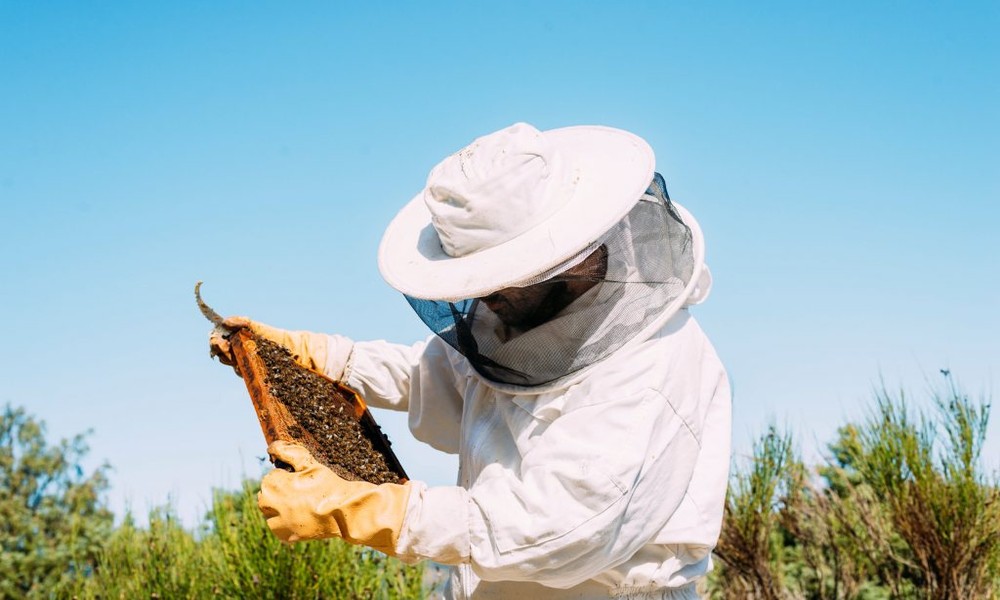
An established colony requires opening up whatever the bees are nesting in. A live cutout means cutting drywall or stucco, removing the comb intact, transferring the queen and most of the workers to a new hive, and repairing the structure afterward. Costs typically range from $500 to $1,500 or more depending on the access. The work takes several hours and may need follow-up visits to recover stragglers.
An extermination is faster and often cheaper at the front end. The colony is killed in place, usually with a labeled insecticide injected into the cavity, and then the dead colony, comb, and stored honey are removed before they leak, attract other pests, or rot inside the wall. The full cost is the kill plus the cleanout plus the structural repair, which evens out the supposed savings more than people expect.
When a Beekeeper Is the Right Call
A beekeeper is the right first call if:
- The bees are a swarm cluster on a tree, fence, or other accessible surface and have been there less than a few days
- The colony is small, recently established, and accessible without major demolition
- The temperament of the bees is calm and the location allows safe approach
- The homeowner specifically wants the bees relocated rather than killed
- The structure or location lends itself to a clean cutout
In Riverside County, several beekeepers and bee rescue groups will respond to swarm and small colony calls. The University of California publishes a list, and the local agricultural commissioner’s office can provide referrals.
When Main Sail Pest Control or Another Licensed Exterminator Is the Right Call
A licensed pest control operator is the right call if:
- The colony has been in a structure long enough to build extensive comb, with honey weight that risks structural damage or wall staining
- The bees have shown aggressive defensive behavior consistent with Africanized stock and live extraction would put residents, neighbors, or the technician at unreasonable risk
- The colony is in a location no beekeeper will safely cut out, such as a high attic peak, a deep masonry wall, a chimney, or a multi-story soffit
- Children, pets, or family members with severe allergies are at active risk and live removal cannot be scheduled in time
- A previous live removal attempt failed and bees have re-occupied the cavity
After extermination, removal of the dead colony and proper sealing of the entry point are essential. Untreated, the honey ferments, the wax melts in summer heat, and rodents and ants follow the smell.
The California Legal and Regulatory Background
California regulates pesticide application broadly through the Department of Pesticide Regulation. Several common pesticides carry label restrictions specifically protecting pollinators, including honey bees, during bloom hours when bees are foraging. A licensed Branch 2 pest control operator follows those label requirements as part of their licensing.
Honey bees are not listed as a public health pest in the same category as cockroaches or rats. The combination of pollinator-protection sentiment, label law, and industry best practice means most reputable pest companies in California will recommend live removal first when it’s genuinely feasible, and reserve extermination for situations where it isn’t. That’s not a marketing position. It’s the responsible read of the law and the biology.
What to Do This Afternoon If You Found Bees
A few simple steps protect everyone.
Stay back at least twenty feet, more if the bees are showing aggression. Note where the entrance is and what time the bees are most active. Keep pets, children, and people with bee allergies inside. Do not spray with anything off the shelf. Do not seal the entry hole, which traps the colony and pushes them through interior walls into living space. Do not throw water at them. Take a phone photo if you can do so safely.
Then call a professional who can identify the situation honestly. The team at Main Sail Pest Control evaluates each bee call across Lake Elsinore, Wildomar, Murrieta, Menifee, Canyon Lake, and Temecula, recommends live removal where it makes sense, refers to a beekeeper when that’s the right answer, and handles extermination only when the location and behavior of the colony genuinely require it. Reach out for an inspection before you make the call yourself.